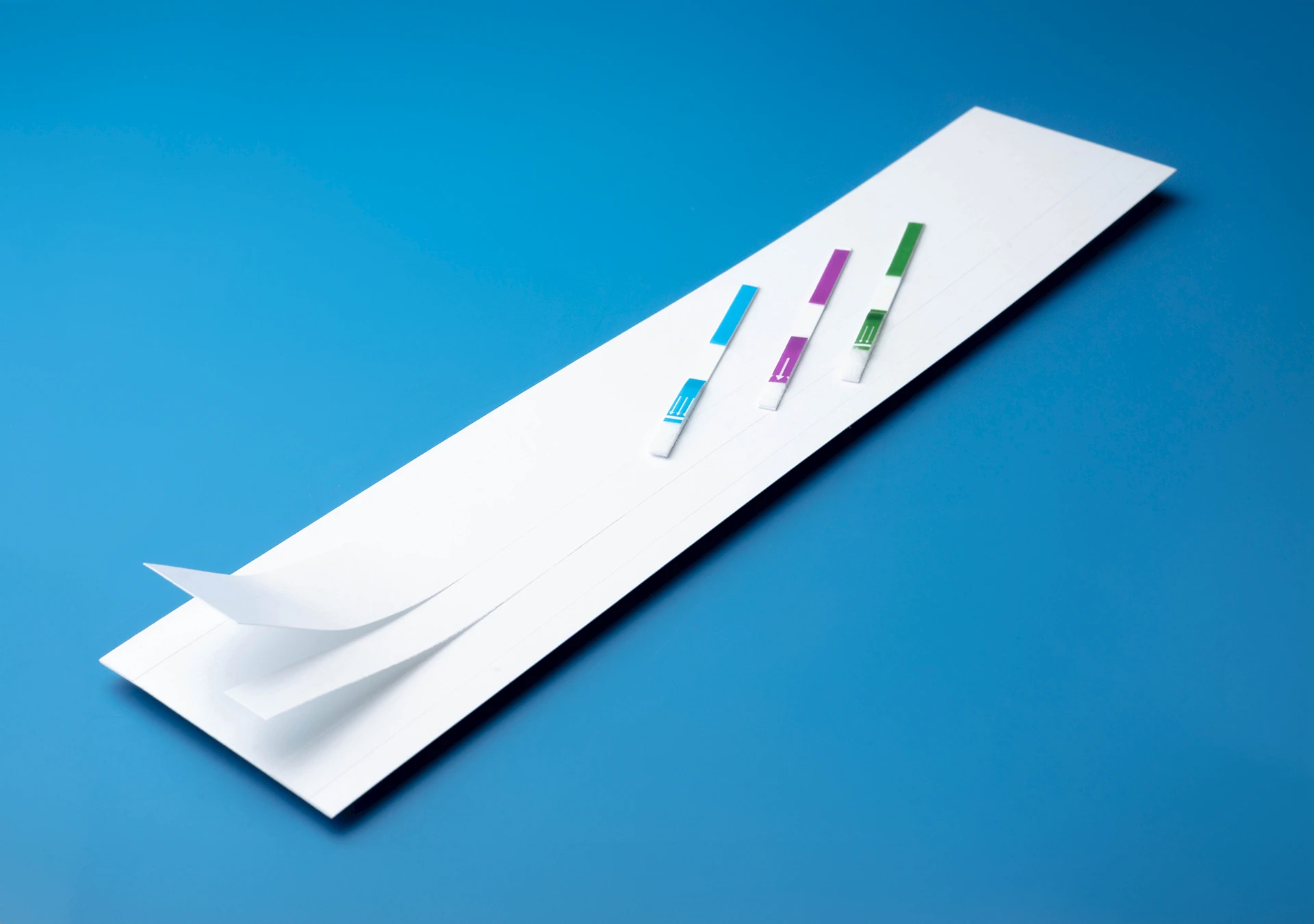
In our deep dive series, we uncover all aspects of lateral flow production. Why? Because every component, no matter how simple it may seem, plays a critical role in the performance, scalability, and reliability of your final test. In this episode we focus on backing cards. What are they and why are they important?
What are backing cards?
At first glance, the backing card looks like the most basic part of a lateral flow test. It doesn’t wick, it doesn’t bind, it doesn’t release reagents, so it’s easy to overlook.
Yet the backing card is the structural backbone that brings every other component together and makes reliable assembly possible.
Without the right backing card, even a perfectly designed strip can suffer from misalignment, inconsistent flow, or poor performance during manufacturing.
𝗪𝗵at do they do?
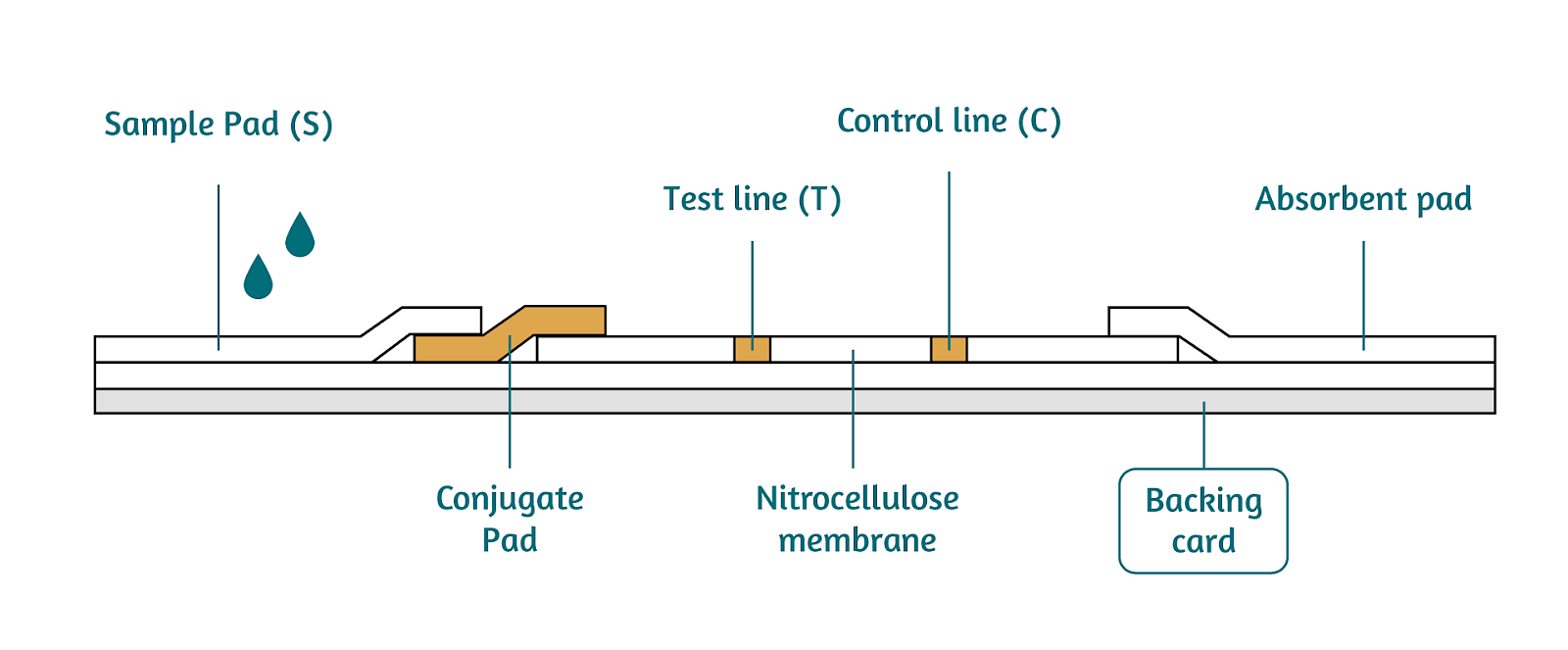
The backing card ensures that the sample pad, conjugate pad, membrane and absorbent pad are held firmly in place, with precise positioning and consistent overlap. All critical for reproducible test performance.
Production challenges
-
Dimensional stability: The card must remain flat and stable, preventing warping that could disrupt flow paths or optical readouts.
-
Adhesive system: The adhesive must hold components securely without bleeding, migrating, or interfering with reagents.
-
Cutting and processing: The material must run cleanly through converting, die-cutting and assembly equipment, especially at scale.
-
Material compatibility: Different cards suit different membranes and pads; mismatched rigidity or adhesive tack can cause component shifts or wrinkles.
Small deviations in the backing card: a slightly uneven surface, a different coating or a subtle change in adhesive can lead to misalignment and batch variation. Especially in high-volume production environments.
Our custom solutions
At Kenosha, we help developers choose and customize the backing card that fits their exact strip design and assembly process, ensuring every component sits where it should for consistent, reliable performance.
Do you want to learn more about our IVD backing cards? Read further on our product page or contact us directly.
